
So, if you’re thinking about trying mediation, the first thing most people ask is: “Right, but how much is this going to cost me?” Honestly, it’s a tricky question because it depends on a few things—what kind of dispute you have, where you live, and who you decide to work with.
Roughly speaking, you might be looking at something like this:
- Family mediation: £80–£150 per hour
- Business or commercial mediation: £100–£250 per hour
- Full-day sessions: £300–£800
Now, I know those numbers might make you blink a bit—but here’s the thing: compared to going through the courts, mediation is usually way cheaper. And the good news? Most mediators will chat with you first for free or offer flexible pricing, so you can get a proper idea before deciding anything. Click Here To Check Out Our Mediation Cost
Mediation Costs vs Court Costs: Which Is Cheaper?
Going through the courts can be expensive and stressful. Solicitors, filing fees, and the time spent waiting for hearings all add up. Mediation, on the other hand, is usually quicker and less costly:
| Cost Type | Typical UK Cost |
|---|---|
| Court (family, divorce, or financial disputes) | £1,000–£15,000+ |
| Mediation cost (per person) | £300–£800 for multiple sessions |
Besides the money, mediation saves time, emotional energy, and often helps keep your relationships intact—especially important when children are involved.
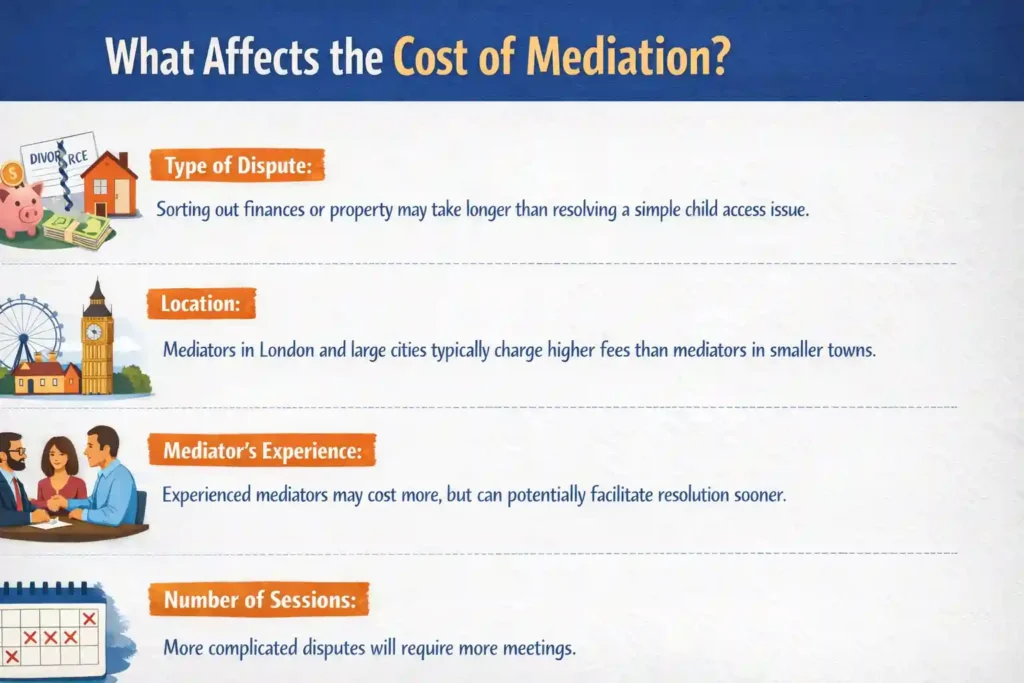
What Affects the Mediation Cost?
There are a number of factors that can affect how much you’ll pay:
- Type of dispute – Sorting out finances or property may take longer than resolving a simple child access issue.
- Location — Mediators in London and large cities typically charge higher fees than mediators in smaller towns.
- Mediator’s experience – Experienced mediators may cost more, but can potentially facilitate resolution sooner.
- Number of sessions — More complicated disputes will require more meetings.
Additional services – Some mediators generate agreements or offer follow-up support that can play a role in the price.
Does Legal Aid Cover Mediation Costs in the UK?
Good news: in some cases, legal aid can cover mediation, especially family disputes involving children or financial hardship. See Here: What is a MIAM Child Arrangements, UK Maidenhead?
Here’s what you need to know:
- Legal aid mainly supports specific types of family mediation.
- You’ll need to show proof of income to qualify.
Even if you receive legal aid, there might still be a small contribution required.
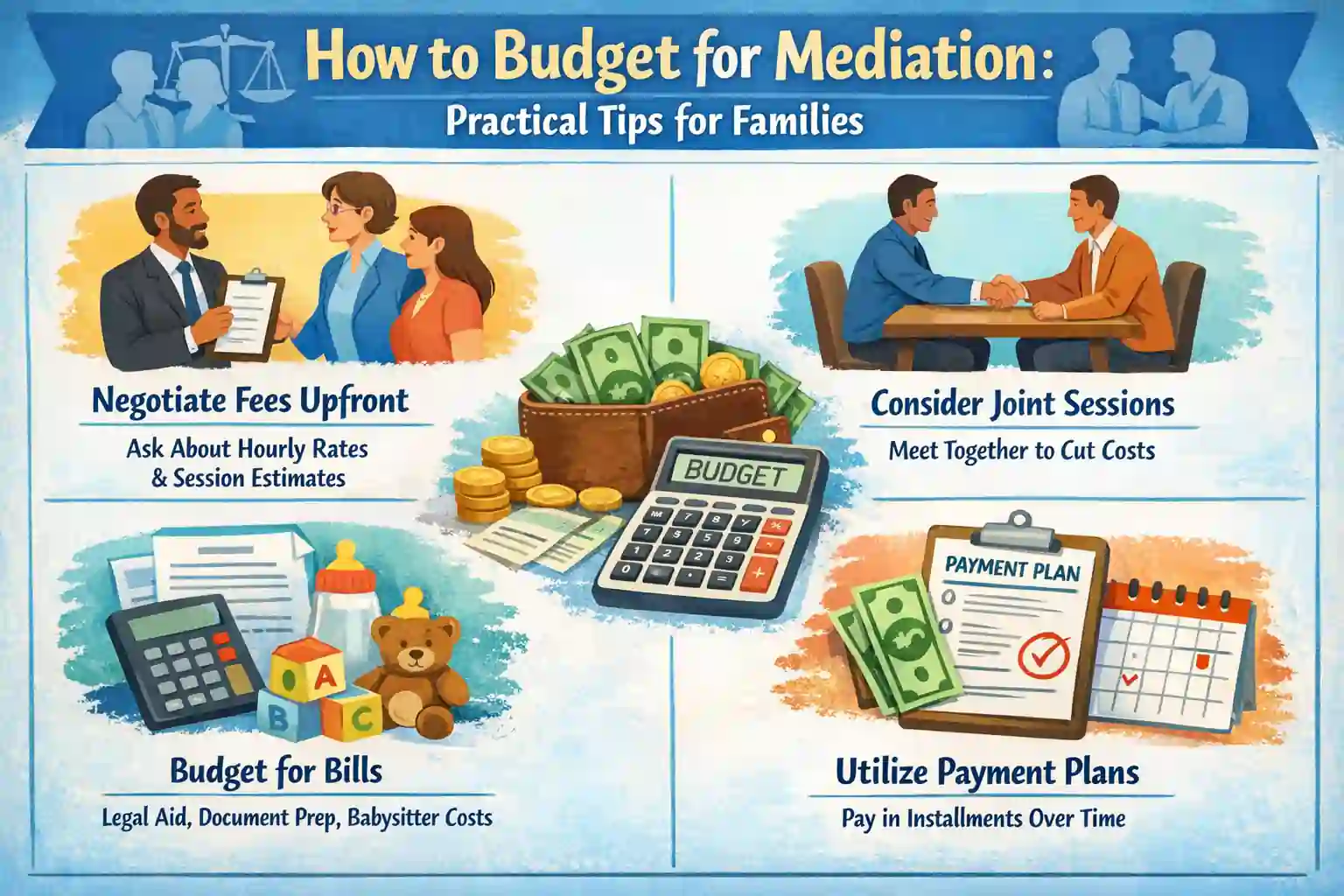
How to Budget for Mediation: Practical Tips for Families
Budgeting for mediation can help reduce stress and ensure the process goes smoothly. Here are some tips:
- Negotiate fees upfront – Request mediators’ hourly rates, as well as estimates of session totals.
- Think about joint sessions — Sometimes, two parties might come together to reduce per-person costs.
- Budget for bills — Include possible legal aid, document prep, or babysitter during sessions.
Utilize payment plans — Most mediation providers will allow you to pay installments, so as not to put undue financial stress on your budget.
Are There Low‑Cost or Free Mediation Options Available?
If you’re short on cash, not to worry — there are still options for mediation. Many don’t know that there are, on the whole, such councils, community mediation programs. These are either free or very low-cost, and are aimed at helping to mediate disputes between families and neighbours.
Some charities provide free mediation, in particular for families or vulnerable individuals. And now, online mediation is no longer unusual. What Is the Family Mediation Voucher Scheme? A UK Maidenhead Guide
So, it’s often lower-priced than a one-on-one in-person meeting, and yet you still get to work with an expert.
Just remember, not everyone is eligible. Some services cater only to specific types of disputes or people with low incomes, so be sure to check the rules before booking.

Why Mediation Costs Vary Between Providers
Not all mediation services are priced equally. Differences arise due to:
- Mediator qualifications and experience – More experienced mediators may charge more, but the resolution could be faster.
- Service scope – Some providers include extra services like post-mediation agreements.
- Session format – Online or telephone sessions are often cheaper than face-to-face meetings.
- Demand and location – High-demand areas often have higher prices.
Choosing a mediator is not just about mediation cost; consider the quality, reputation, and suitability for your case. See Here: What Is a Consent Order in the UK? A Simple Guide Every Couple Should Read
Is Mediation Cost-Effective for Divorce, Child Access, or Financial Disputes?
Absolutely. Compared to court proceedings:
- Divorce mediation can save thousands in solicitor fees.
- Child access mediation helps maintain a cooperative co-parenting arrangement without lengthy litigation.
- Financial disputes are often settled faster, with more flexibility in outcomes.
Besides monetary savings, mediation reduces stress, keeps discussions private, and allows parties to control the outcome.
How to Get an Accurate Mediation Cost Estimate Before You Start
Honestly? Just ask. That’s the easiest way. People freak out about money, but if you’re upfront, it’s not so scary.
Tell your mediator the whole story. Don’t sugarcoat it. If things are messy, it’s going to take more sessions. More sessions = more money. Simple.
Then, get a proper breakdown. Don’t just nod and say “okay.” Ask stuff like: how much per session, is paperwork extra, do follow-up mediation cost anything? Little things add up fast.
Also, life happens. Kids get sick, work comes up, trains are late. Ask about rescheduling fees—better to know now than cry over a surprise bill later.
Finally, ask if you can pay in bits. Many mediators are fine with installments or reduced fees if your budget is tight. Seriously, just ask.
Do this, and suddenly it’s not scary. You know what you’re paying, you can plan, and you can focus on actually solving your problem instead of stressing about money. See Here: Family Mediation UK Explained: What It Is, How It Works & Who It’s For

FAQs – Mediation Costs in the UK
Q1: How much can I realistically expect to pay for family mediation in the UK?
How much the mediation will cost depends on the complexity of your situation, where you live, and the mediator’s level of experience. A session usually costs around £80–£150 per person, while a whole day can range between £300–£800. If your dispute is more complex, it may take several sessions, so it’s smart to get an upfront estimate so you can budget accordingly.
Q2: Is mediation truly cheaper than court?
Yes, in most cases it can. Court fees, solicitor charges, and long legal processes quickly mount up to thousands of pounds. Mediation is typically speedier, more informal, and considerably less expensive. In addition to money, it also prevents emotional strain and affords both sides more influence on the results.
Q3: What are my options if I can’t pay standard mediation fees?
Absolutely. And many local councils have mediation services available for family disputes — some even free of charge. You may also get help from charities and community organisations. Online mediation platforms may also be lower in mediation cost. It’s always good to ask what alternatives there are before you sign on the dotted line.
Q4: Does each party have to pay the same for mediation?
Not necessarily. Certain mediators bill each side separately, given that they are working with separate parties, while others charge for the whole session and split the mediation cost between both sides. It varies by who the provider is and what you negotiated. Know this before you begin so that there isn’t any confusion later.
Q5: Can I get my mediation costs covered with legal aid?
In certain cases, yes. Legal aid can help to cover family disputes, especially in cases concerning children or if you are on a low income. But not all types of mediation are eligible, and eligibility is strict. You have to show proof of funds and check in advance with your mediator or solicitor.
Q6: What could that look like in terms of mediation sessions and, therefore, cost?
This depends on your dispute. Fairly simple matters might be resolved in just 1–2 sessions, whereas more complicated issues—such as arrangements for children or financial disagreements—would take 4–6 or sometimes even more sessions. Each session adds to the total, so it’s helpful if you get an estimate upfront to help you budget and avoid surprises.
For Further Information, please Call Us On 03300 101 029