
Debt mediation Maidenhead is a practical way to resolve financial disputes without going to court. Rather than letting things escalate into legal action, both sides come together with an independent mediator to talk things through and try to reach an agreement that works for everyone.
It’s often used when someone owes money but is struggling to pay it back in full or on time. Rather than ignoring the situation or letting it get worse, mediation opens up a structured conversation.
The mediator doesn’t take sides or make decisions. Their role is to guide the discussion, keep things calm, and help both parties find a solution they can live with. See Here: What Is Property Division Mediation? A UK Maidenhead Guide
For many people in the UK, debt mediation offers a more practical, less stressful way to deal with financial disputes—especially when communication has already broken down.
How Debt Mediation Works: Step-by-Step
Debt mediation Maidenhead is often much simpler than people expect. Here’s how it typically begins:
Step 1: Initial contact
In most cases, one person takes the first step and gets in touch to start the mediation. The other side is then invited to join in. For things to go ahead, both people simply need to be willing to give it a try and take part in the process.
Step 2: Preparing for mediation
Both sides compile simple data about the debt — how much is owed, your payment history and any documents relevant to the case.
Step 3: The mediation session
The number one thing to remember is that a trained mediator brings the two parties together (online or by phone). Everyone gets to explain their side. Family Mediation UK Explained: What It Is, How It Works & Who It’s For Read Here
Step 4: Exploring solutions
Now, this is where one actually does the work. You will discuss payment plans, reduced settlements, or extended deadlines.
Step 5: Agreement
What happens next is articulated in writing for both sides to understand what to expect.
Not to “win”—but to find a real path forward.
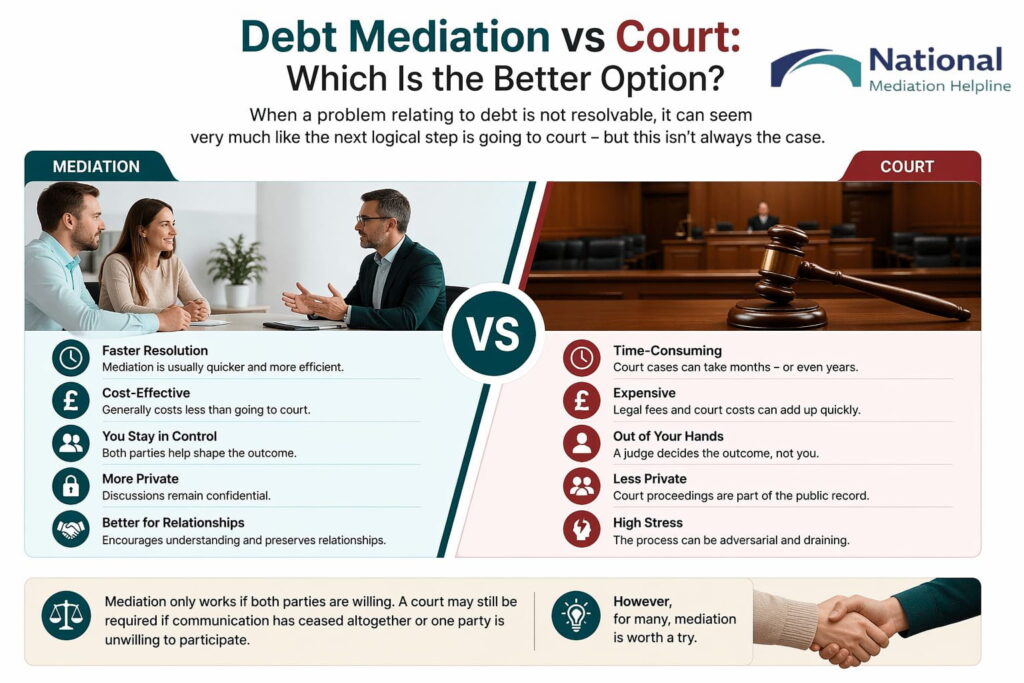
Debt Mediation vs Court: Which Is the Better Option?
When a problem relating to debt is not resolvable, it can seem very much like the next logical step is going to court – but this isn’t always the case.
Court cases take time, they are costly, but more so, they can become very stressful sooner than you may imagine. Once a judge is brought in, there’s also very little control over the outcome.
Mediation, conversely, has greater flexibility. You are an active part of the process, not waiting for a decision. Normally, it is faster, less private, and much more informal.
At the same time, mediation only works if both are willing. A court may still be required if communication has ceased altogether or one party is unwilling to participate.
However, for many, mediation is worth a try.
Can Debt Mediation Reduce What You Owe?
In some cases, yes—but it depends on the situation.
Debt mediation Maidenhead isn’t about automatically wiping away what’s owed. Instead, it creates space for honest discussion. If someone genuinely can’t afford to repay the full amount, the creditor may agree to a reduced settlement. Check Out Here: Can Divorce Mediation Maidenhead Help You Avoid Court Battles?
This often happens when the alternative is getting nothing or going through a long, uncertain legal process.
Other outcomes might include:
- Smaller monthly payments that feel more realistic
- Extra time to clear the balance
- A short break to help get things back on track
Every agreement is different. The goal is to reach something realistic and fair for both sides.

Who Can Benefit from Debt Mediation?
The range of people and the mediation for debt that helps is broad.
It’s especially useful for:
- People who are finding it difficult to repay personal loans
- The landlord and the tenant were in a situation where rent arrears were involved.
- Firms are chasing money owed for unpaid bills.
- Families or friends where money is a source of tension
If there is a dispute over finance, and both sides are open to dialogue, then mediation should be considered as an option.
It’s not just about finances. A relationship saver for sure—not to mention an overall stress reliever.
What Happens If Debt Mediation Fails?
Not every mediation ends in an agreement—and that’s okay.
Even if mediation fails, both parties have the right to seek other means of redress, including going through the courts. Almost everything said in mediation cannot be used against you in court, which is what keeps the mediation process open and honest.
Even when it doesn’t fully resolve the issue, mediation can still be useful. It often helps clarify positions, narrow down disagreements, and make the next steps clearer. See Here: What Is the Family Mediation Voucher Scheme? A UK Maidenhead Guide
In some cases, people return to mediation later with a different mindset.
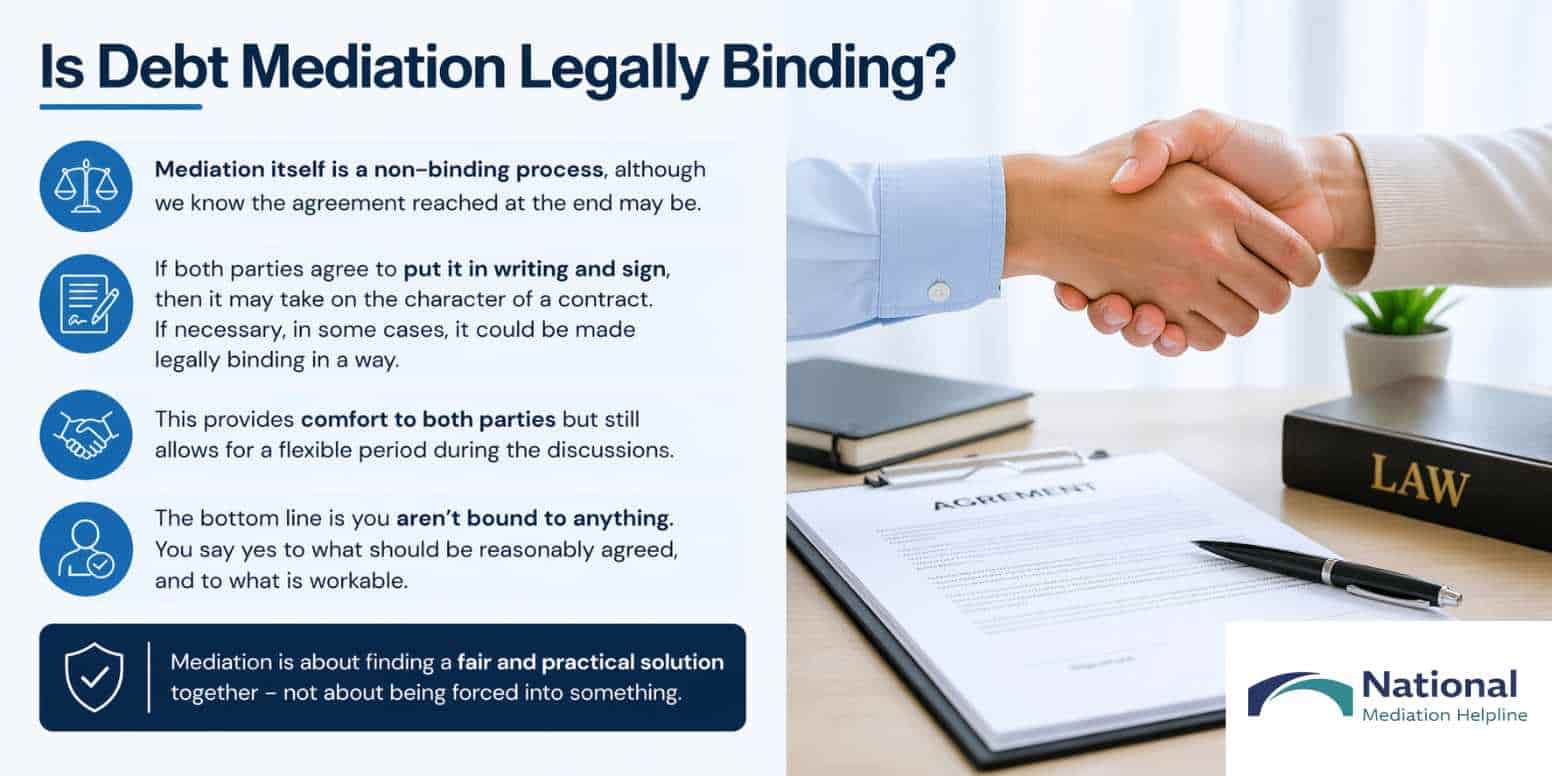
Is Debt Mediation Legally Binding?
Mediation itself is a non-binding law, although we know the agreement reached at the end may be.
If both parties agree to put it in writing and sign, then it may take on the character of a contract. If necessary, in some cases, it could be made legally binding in a way.
This provides comfort to both parties but still allows for a flexible period during the discussions.
The bottom line is you aren’t bound to anything. You say yes to what should be reasonably agreed, and to what is workable.
How Mediation Can Help You Avoid Debt Collection Stress
Debt collection is relentless — you receive calls, letters, and the pressure mounts.
Mediation offers a calmer alternative.
It establishes a framework that allows both parties to have an open conversation instead of continual chasing. Once a plan is agreed upon, it usually reduces the number of further times people need to touch base or escalate. What Is Shuttle Mediation Maidenhead? A Simple UK Guide
Most importantly for many is peace of mind. The awareness that there is a plan — and that both sides have signed off on it — can be both reassuring.

Debt Mediation for Small Businesses: Recovering Money Without Court
For small businesses, unpaid invoices can cause real problems. Cash flow gets tight, and chasing payments takes time and energy.
Mediation can help recover money without damaging client relationships.
Rather than jumping straight into legal action, mediation gives both sides a chance to resolve things professionally. It often leads to quicker payments—sometimes through instalments or revised terms.
It shows you’re making a genuine effort to sort things out, which can go a long way in protecting your reputation.
For many small businesses, it’s simply a sensible first step before considering court.
Debt Mediation vs Debt Management Plans: What’s the Difference?
These are two things that a lot of people get confused about, but there exists a difference. Why do we use both?
Debt mediation Maidenhead is the service in which a dispute between 2 parties – most typically over a particular debt – is negotiated.
Debt management plans (DMPs) are ongoing, often longer-term arrangements in which one or more debts are actively managed by a third party, with lower monthly payments made over time to pay off multiple debts.
In simple terms:
- Mediation = resolving a disagreement
- DMP = debt management plan
Both of these can be useful depending on the context. Do I have a “better” option? Microsoft 365 versus Google Workspace: Which is your go-to?
FAQs
Q: Does mediation need both parties agreement?
Yes, it does. However, mediation only works if the two sides agree to participate. Because it’s a voluntary process just like this, not everyone at the table may want to find common ground.
Q: Is mediation confidential?
Yes—everything discussed in the process is private and not shared outside of it.
Q: Is mediation a less expensive option than going to trial?
Generally, yes. It is usually cheaper and features far less time than court.
Q: How long does debt mediation Maidenhead take?
It really depends on the situation. Some cases are sorted in a single session, especially if they are fairly straightforward. Others might take a bit longer, particularly if there are more details to work through or both sides need time to consider their options.
Q: What should I do if the other party is not willing to mediate?
If they don’t agree, you may need to consider other options such as legal action.
Q: May I take someone along to mediation Maidenhead?
In many cases, yes. And when needed, you bring support or wisdom.
For Further Information, please Call Us On 03300 101 029