
Shuttle mediation Maidenhead is a type of family mediation where both parties stay in separate rooms (or separate online spaces), while the mediator moves between them to carry messages, proposals, and responses back and forth.
It’s often used when emotions are running high or when one or both people feel uncomfortable sitting face-to-face. Instead of direct conversations, the mediator acts as a calm, neutral bridge.
In the UK Maidenhead, shuttle mediation is commonly used during divorce, separation, child arrangements, or financial disputes. It still follows the same legal and professional standards as traditional mediation — the only real difference is how communication happens.
For many people, it takes the pressure off. You don’t have to worry about confrontation, interruptions, or heated arguments. You can take your time, think things through, and respond in a more measured way.
Shuttle Mediation vs Traditional Mediation: What’s the Difference?
In traditional mediation, both people are in the same room, talking things through face-to-face, while the mediator helps guide the conversation. This can work well when communication is still calm enough to be managed respectfully. Click Here: What Is a Consent Order in the UK Maidenhead? A Simple Guide Every Couple Should Read
Shuttle mediation takes a different approach. Each person stays in a separate room, and the mediator moves between them, passing on messages and helping both sides work towards an agreement.
This method is often more suitable when there is:
- High conflict or ongoing tension
- A breakdown in communication
- Strong emotions that are hard to manage
- Worries about pressure, intimidation, or imbalance
Traditional mediation can feel more direct and cooperative, but shuttle mediation creates a calmer, more structured setting.
Neither option is “better” than the other — it really depends on what feels most comfortable, safe, and effective for your situation.
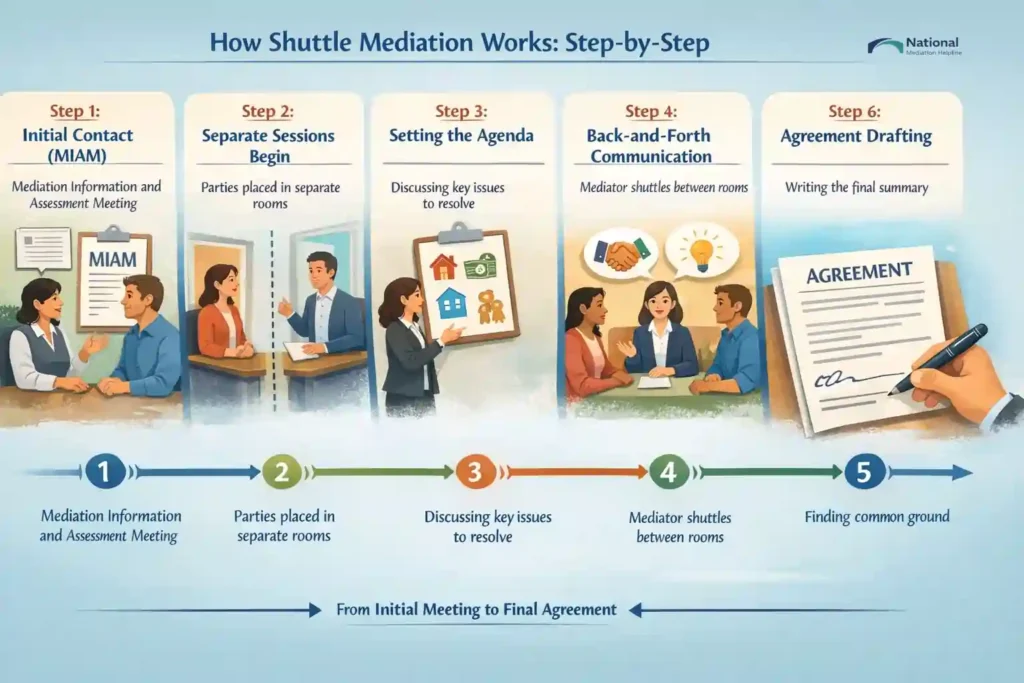
How Shuttle Mediation Works: Step-by-Step
Even though you’re not in the same room, the process itself is actually quite straightforward.
Step 1: Initial Contact (MIAM)
Most people start with a MIAM. It’s just a one-to-one meeting where the mediator explains things in plain terms and checks whether mediation is likely to work in your situation.
Step 2: Separate Sessions Begin
If you both want to go ahead, sessions are set up. You won’t be sitting together — you’ll either be in different rooms or on separate calls if it’s done online. Can Divorce Mediation Help You Avoid Court Battles?
Step 3: Setting the Agenda
At this point, the mediator will ask each of you what you want to sort out. For some people it’s mainly about children, for others, it’s finances or property, or a mix of everything.
Step 4: Back-and-Forth Communication
The mediator then goes between you, passing things on. It’s not rushed — you get time to think about what’s been said before responding, which helps take the edge off things.
Step 5: Negotiation and Refinement
As the sessions go on, conversations usually become a bit easier. Positions can shift slightly, and the mediator helps keep things clear and moving without misunderstandings building up.
Step 6: Agreement Drafting
If you manage to reach an agreement, it’s written up as a summary. From there, you can take it to a solicitor if you want to turn it into something legally binding.
When Is Shuttle Mediation the Best Option?
Shuttle mediation Maidenhead is particularly useful when sitting face-to-face just isn’t realistic.
It may be the best option if:
- Conversations quickly turn into arguments
- There’s a history of conflict or emotional strain
- One person feels anxious or intimidated
- You simply don’t feel ready to be in the same room
It’s also helpful if communication has completely broken down. Sometimes, people aren’t even able to have a basic conversation without things escalating — and that’s where shuttle mediation creates a safer space to move forward. Denied Access to Child in the UK Maidenhead? Mediation Resolves 4x Faster Than Courts
Importantly, choosing shuttle mediation isn’t a sign of failure. It’s often a practical and thoughtful decision that makes resolution possible when other approaches might not work.

Preparing for Shuttle Mediation: Practical Tips
Going into mediation prepared can make a big difference.
- First thing — take a bit of time to think about what you actually want out of it. Not what sounds fair on paper, but what matters to you day-to-day. That might be your kids, money worries, or staying in the house.
- Get your paperwork together early. It doesn’t need to be perfect, just enough so you’re not scrambling later. Bank stuff, income details, mortgage — the usual.
- Try not to go in ready for a fight. Easier said than done, but if you’re only there to argue your side, it usually just drags things out.
- One good thing about shuttle mediation is that you don’t have to respond instantly. Use that pause. Think it through instead of reacting in the moment.
- And honestly, don’t expect everything to go your way. It rarely does. The aim is something you can both live with, not a perfect outcome.
Shuttle Mediation in Child Access and Parenting Disputes
When children are involved, emotions can run even higher. Shuttle mediation Maidenhead helps reduce direct conflict, which is especially important when discussing parenting arrangements.
Instead of arguing face-to-face, both parents can focus on what’s best for the child in a calmer setting. See Here: What is a MIAM Child Arrangements, UK Maidenhead? The Final Guide on MIAM in 6 Minutes to Resolve Issues Faster, Cheaper, and Lasting Longer
Common issues covered include:
- Where the child will live
- Contact schedules and routines
- Holidays and special occasions
- Communication between parents
Because you’re not in the same room, it’s easier to stay focused on practical solutions rather than past disagreements.
In many cases, this leads to more stable, child-focused agreements that actually work in real life.
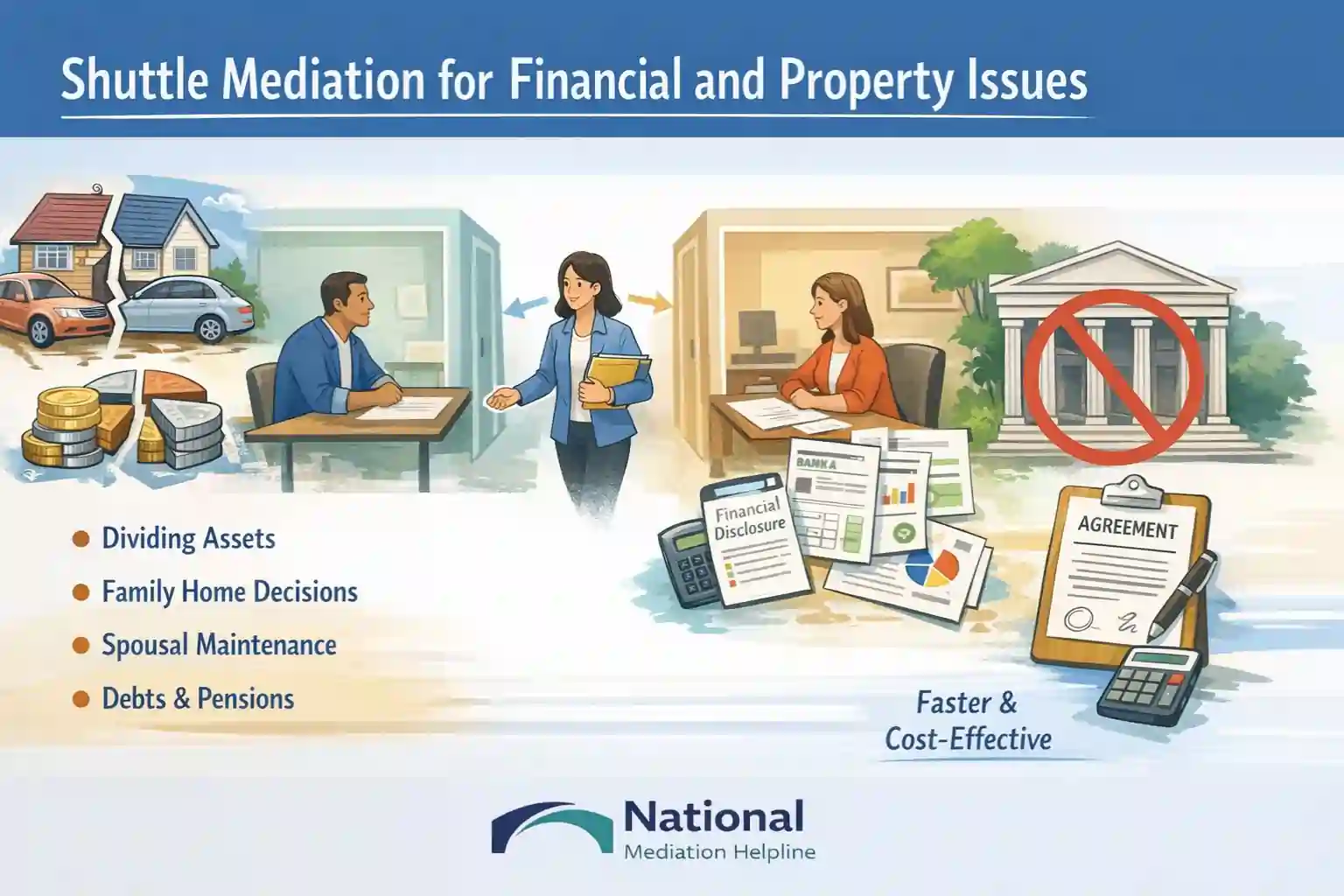
Shuttle Mediation for Financial and Property Issues
Shuttle mediation Maidenhead is often used when couples separate and need to sort out financial and property matters without sitting in the same room.
This can include:
- Dividing assets
- Deciding what happens to the family home
- Arranging spousal maintenance
- Managing debts and pensions
Money issues can easily become emotional after a separation, and direct conversations don’t always go smoothly. Shuttle mediation helps by keeping communication filtered through the mediator, so things stay calmer and more focused.
Both sides are usually asked to share full financial details, so there’s no guessing and everyone is working from the same information. The mediator then helps each person think through practical, realistic options and move towards an agreement that feels workable for both. See Here: What Is Property Division Mediation? A UK Maidenhead Guide
Compared to court, it’s usually far less stressful, and in many cases it’s also quicker and less expensive.
This makes the process much more transparent and easier to discuss.
Is Shuttle Mediation Confidential and Safe?
Yes, shuttle mediation is both confidential and designed to feel safe.
Everything discussed during mediation is private and cannot be used in court (with a few legal exceptions, such as risk of harm).
The separate-room setup adds another layer of comfort, especially if there are concerns about conflict or pressure. You’re given space to think, speak freely, and take breaks if needed.
Mediators are trained to manage sensitive situations and ensure the process remains balanced and respectful.
If at any point mediation doesn’t feel right, you’re not forced to continue. Your wellbeing always comes first.
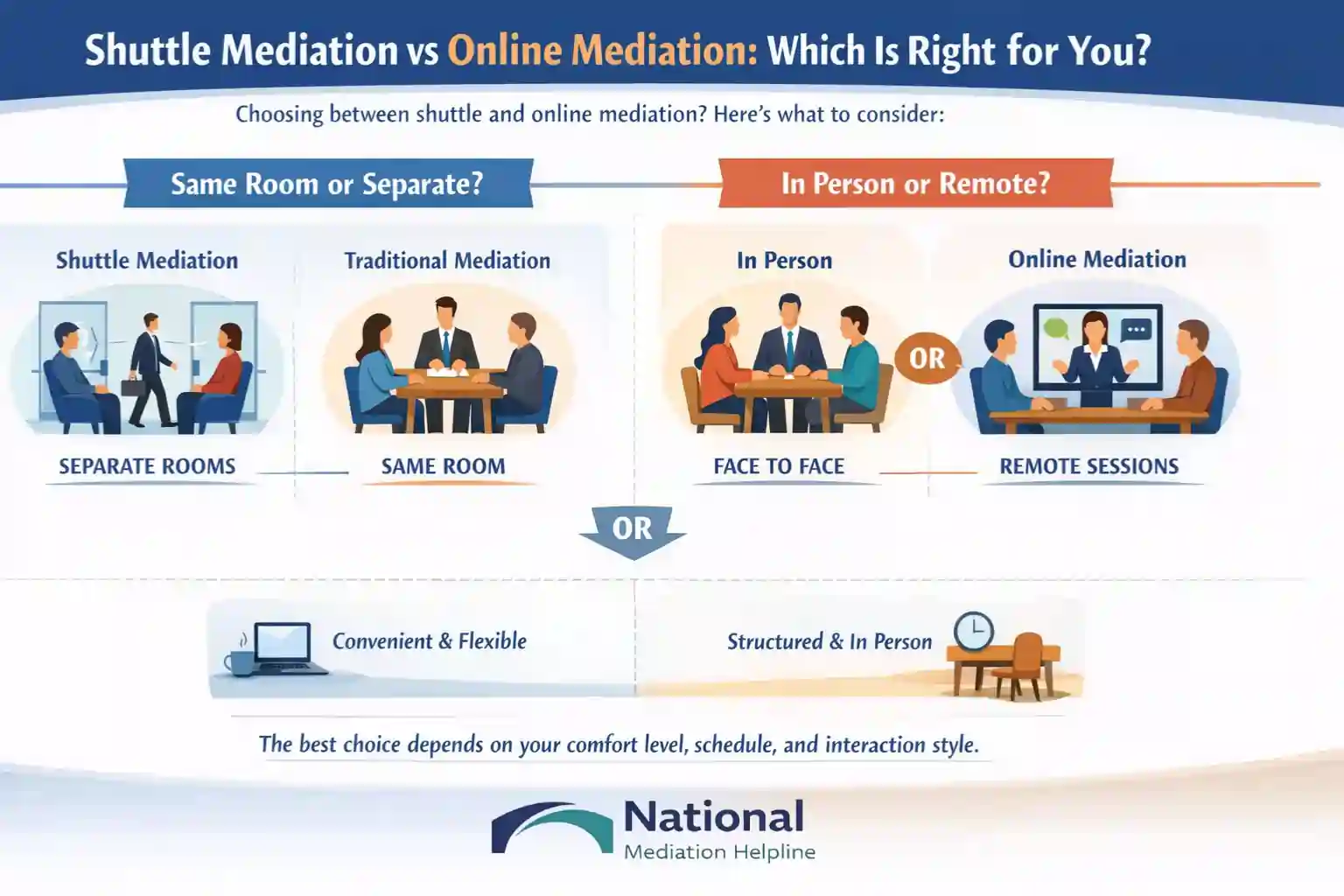
Shuttle Mediation vs Online Mediation: Which Is Right for You?
These two are often mixed up, but they actually refer to different things.
Shuttle mediation Maidenhead is about the structure of the process (the parties stay in separate rooms), while online mediation is about how the sessions are delivered (via video call or remote platform).
You can even have online shuttle mediation, where each person joins from a separate virtual room and the mediator moves between them digitally.
So the real question becomes:
- Do you want to be in the same room or in separate spaces? (shuttle vs traditional)
- Do you want to meet in person or attend remotely? (in-person vs online)
Online mediation is often more convenient and flexible, while in-person sessions can sometimes feel more focused and formal.
The right option really depends on your comfort, your availability, and how comfortable you feel with direct communication.
Success Stories: How Shuttle Mediation Helped Families Reach Agreements
A lot of people come into mediation at a point where things feel completely stuck. Communication has usually broken down, and it’s not uncommon for both sides to feel like there’s no way they’ll ever agree on anything. See Here: What Is the Family Mediation Voucher Scheme? A UK Maidenhead
For example, one couple we worked with hadn’t really spoken properly for months. Even simple conversations would turn into arguments, so co-parenting decisions felt impossible. Through shuttle mediation, they didn’t have to sit opposite each other, and that alone changed the tone of everything. Little by little, they managed to agree on a routine for the children that actually worked in day-to-day life.
In another situation, there was a long-running dispute over the family home. Neither person was in any mood to compromise at the beginning, and things had already started to feel like they were heading towards court. But once discussions were separated and handled step by step, both sides were able to soften their position a bit. In the end, they reached an agreement they could both live with, without the stress and cost of court proceedings.
These kinds of outcomes come up quite often. Shuttle mediation tends to help because it takes away the pressure of face-to-face confrontation, so people are less reactive and more able to actually work through what needs to be decided.
FAQs – Shuttle Mediation In the UK Maidenhead
Q: What exactly happens during shuttle mediation sessions in the UK Maidenhead?
During shuttle mediation, you and the other person stay in separate rooms (or join from different virtual spaces), and the mediator moves between you to communicate. They share information, offers, and responses back and forth, so you don’t need to speak directly to each other. This setup helps keep emotions down and makes it easier to have a more focused, calm discussion.
Q: Is shuttle mediation legally binding once an agreement is reached?
No, not automatically. The agreement on its own isn’t legally binding. Still, it can be made official if it’s put into a legal document by a solicitor or approved by the court, especially in financial or family arrangements.
Q: Is shuttle mediation more expensive than traditional mediation?
It can sometimes cost a bit more if sessions run longer or need more back-and-forth, but in most cases it’s still far cheaper than going through the court process.
Q: Do both parties have to agree to shuttle mediation?
Yes, both people need to agree to take part. It’s a voluntary process, but you don’t need to agree on the issues in advance—just agree to give mediation a try.
Q: Can shuttle mediation be used if we don’t get along at all?
Yes, it can. In fact, it’s often used in situations where people can’t really speak to each other anymore. You don’t have to meet or have any direct contact, which is what makes it work in high-conflict situations.
For Further Information, please Call Us On 03300 101 029